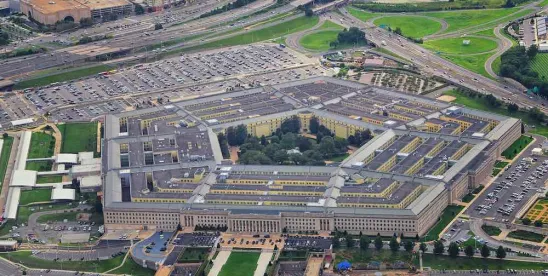
This is one in a series of GT Alerts examining the president’s FY 2027 budget request to Congress, breaking down the president’s budget for the Department of War (part 1). Part 2 focuses on the U.S. Army’s FY 2027 budget request. Part 3 focuses on the proposed budget for the Department of the Navy. This fourth and final alert focuses on the Air Force’s budget request.
Bottom Line Up Front
The Department of the Air Force’s FY 2027 budget request reflects an inflection point in both scale and strategic intent. At approximately $338.8 billion, the request represents one of the largest single-year increases for the Department and marks an effort to address readiness shortfalls while accelerating modernization across air, space, and nuclear forces. The budget is structured to support near-term operational demands at the same time that it advances long-term transformation priorities, particularly in advanced aircraft, space systems, and the supporting industrial base.
As with other FY 2027 defense submissions, the Air Force proposal relies on a combination of traditional discretionary appropriations and a substantial amount of proposed mandatory funding. While the request sends a strong signal regarding future investment priorities and anticipated demand, the ultimate scope and timing of execution will depend heavily on congressional authorization and appropriations decisions.
1. Topline & Budget Structure
The FY 2027 request for the Department of the Air Force totals approximately $338.8 billion, encompassing both the U.S. Air Force and the U.S. Space Force. Of this amount, roughly $267.7 billion supports Air Force programs, while approximately $71.1 billion is allocated to the Space Force. Taken together, this would represent an increase of more than $90 billion over FY 2026 enacted levels, positioning FY 2027 as a pivotal year in the Department’s long-term investment trajectory.
The structure of the request mirrors broader Department of War budget trends for FY 2027. The majority of funding is sought through discretionary appropriations, covering personnel, operations and maintenance, procurement, and research and development. However, a notable portion of the growth, particularly funding tied to industrial capacity, infrastructure, and select modernization initiatives, is proposed as mandatory funding to be enacted through separate legislative vehicles, such as reconciliation. This dual-track approach introduces additional uncertainty into the budget outlook, as discretionary funding will move through the annual appropriations process while mandatory funding will require separate congressional approval.
2. Major Investment Priorities
A. Readiness & Operations
A central feature of the FY 2027 request is its emphasis on restoring and sustaining readiness. Operations and Maintenance (O&M) funding would increase significantly, reflecting an effort to reverse years of deferred maintenance, improve aircraft availability, and rebuild surge capacity. The Air Force proposes substantial growth in weapon system sustainment, flying hour programs, and installation support, signaling a recognition that readiness shortfalls cannot be addressed through modernization alone.
Funding for flying hours, depot maintenance, and base operations is designed to ensure that existing platforms remain mission-capable while new systems are fielded. The request also includes a dramatic increase in facilities sustainment, restoration, and modernization funding, aimed at addressing infrastructure deficiencies that have affected readiness, resilience, and quality of life.
B. Personnel & Workforce Investment
The FY 2027 budget places emphasizes people as a core readiness enabler. The Department proposes nearly $49 billion in personnel-related funding, supporting pay raises, targeted incentives, and a planned increase to add 12,700 more Airmen and Guardians in end strength across the Air Force and Space Force. These investments are intended to improve recruitment and retention in a highly competitive labor environment while ensuring that the force can operate and sustain increasingly complex systems.
By linking workforce growth and quality-of-life improvements directly to operational readiness, the request reinforces the view that human capital is integral to mission success, particularly as the Department fields more advanced and technologically demanding platforms.
C. Procurement & Force Modernization
The procurement request, which is $73.3 billion, grows sharply in FY 2027 compared to previous years, reflecting the Air Force’s commitment to recapitalizing aging fleets and accelerating delivery of next-generation capabilities. The request includes significant investment in major aircraft programs, including the B 21 Raider bomber, continued procurement of F 35 aircraft, additional KC 46A aerial refueling tankers, and early operationalization of the Collaborative Combat Aircraft concept.
These procurement investments would be complemented by continued funding for the modernization of the nuclear enterprise, including $4.5 billion towards the Sentinel intercontinental ballistic missile program. Together, these efforts signal a shift toward replacing legacy platforms with systems designed to operate in more contested and technologically complex environments.
D. Research, Development, Test & Evaluation (RDT&E)
The FY 2027 request includes a substantial increase in RDT&E funding, bringing total investment to approximately $98 billion. This growth reflects the Air Force’s focus on accelerating the transition from research and prototyping to fielded capability. Funding supports a wide array of programs, including advanced aircraft development, space-based missile warning and communications systems, autonomous platforms, and emerging technologies such as hypersonics.
The scale of RDT&E investment suggests an effort to maintain technological advantage while shortening development timelines and reducing the gap between innovation and operational deployment.
3. Strategic & Structural Themes
Several broader themes emerge from the FY 2027 Air Force budget request. First, the Department is attempting to simultaneously fund readiness and modernization, rather than sequencing these priorities over multiple years. This represents a departure from some prior cycles in which modernization came at the expense of near-term readiness.
Second, the request emphasizes the industrial base as a strategic asset. Investments in depot capacity, facilities, sustainment, and production infrastructure indicate that the Air Force views industrial throughput and resilience as essential to operational success.
Third, the budget reinforces a shift toward multi-domain and integrated capabilities, particularly through the close alignment of Air Force and Space Force investments. This integration is evident in proposed funding for space systems, command and control, and advanced networking capabilities that support joint and combined operations.
4. Congressional Outlook & Budget Cycle Considerations
As with all president’s budget submissions, the FY 2027 Air Force request marks the beginning of the congressional budget process rather than its conclusion. The proposal must move through authorization in the National Defense Authorization Act and through appropriations legislation before funding becomes available.
The reliance on both discretionary and mandatory funding streams adds complexity to this process. While discretionary funding will be addressed through annual appropriations, proposed mandatory funding will require separate legislative action, creating additional uncertainty around timing and final funding levels. Congress may also adjust procurement quantities, funding allocations, or program priorities as part of the authorization and appropriations process.
5. Takeaways for Industry & Stakeholders
For industry participants, the FY 2027 Air Force request signals sustained and growing demand across a wide range of sectors, including aircraft manufacturing, sustainment and depot support, advanced technologies, and infrastructure modernization. Prime contractors and major suppliers may see opportunities tied to platform recapitalization and long-term sustainment contracts, while smaller firms may find entry points in facility upgrades, software, autonomy, and advanced manufacturing.
Technology providers focused on artificial intelligence, autonomy, space systems, and digital engineering are positioned to align with the Air Force’s modernization and RDT&E priorities. At the same time, stakeholders should monitor congressional activity, as changes to funding mechanisms or program scope could materially affect contracting timelines and market opportunities.
Conclusion
The Air Force’s FY 2027 budget request focuses on readiness, modernization, and industrial capacity. By pairing near-term operational funding with long-term capability development, the Department is signaling a commitment to transforming the force while addressing existing readiness challenges.
Nevertheless, the ultimate impact of the FY 2027 request will depend on congressional action. As the budget moves through the authorization and appropriations process, stakeholders should expect refinement and adjustment while recognizing that the overall direction points toward continued growth in demand for advanced air, space, and sustainment capabilities in the years ahead.